You can contact the site administration via email: contact@the-alawites.com

Who are the Alawites?
The Alawite sect is a deeply rooted philosophical and spiritual sect. Its doctrines include everything revealed to Judaism, Christianity, and Islam, and are based at their core on the understanding of ancient Greek philosophers such as Thales, Plato, Aristotle, Socrates, and others. It is not limited to heavenly religions, as it venerates all philosophers and scientists around the world, such as Zoroastrianism, Buddhism, and others.
Science is of the highest order of sanctity to the Alawites, specifically the sciences that benefit humans, such as physics, chemistry, mathematics, astronomy, and existential philosophy. It is not based on the sanctification of religious texts, but rather on a deep understanding and logical analysis of what is compatible between science and religion.
Alawism is a unique intellectual and spiritual framework, drawing its essence and spirit from every doctrinal or philosophical school of thought, and elevating knowledge to a position of paramount importance, one of understanding and logical analysis rather than blind worship. They have formulated a comprehensive worldview, integrating reason and revelation, embracing ethnic, linguistic, and cultural diversity, and believing that the search for truth is only complete through a profound study of both the universe and the self.
The Alawite sect does not have sacred religious rituals. The rituals are considered superficial and complementary to the cognitive essence, not a substitute for it. Religious teachings cannot be limited to rituals only, as the scientific and spiritual aspects remain the most sacred space for them.
1. Historical Roots
The Alawites have roots in lands inhabited for thousands of years, stretching from the Hadhramaut Plain in southern Arabia to the Antiochian Mountains in northern Syria and the Sinjar Mountains in northern Iraq. Their origins—regardless of their diverse ethnicities—are deeply embedded in Syriac culture.
- Syriac calendarThey rely on what is known as the Syriac “Year of the Creation of the World,” which today, in 2025 AD, corresponds to the year 6775 according to this calendar, and they celebrate its occasions and record their dates between the pages of manuscripts.
- Language and pronunciationMany of them retained Syriac and Aramaic vocabulary in their everyday dialect, which is the language spoken by Jesus Christ.
Ancient cultural roots
- Ugarit civilization (In Ras Shamra, northern Syria), where the oldest cuneiform tablets were found that dealt with gods and rituals.
- Babylonian and Assyrian In Mesopotamia, with its creation and governance stories, the first laws were formulated.
- Phoenician On the Syrian and Lebanese coast, where the Phoenicians excelled in navigation and the invention of the alphabet.
- Ancient Greek Extending from Athens, through the Syrian coast, to the Egyptian coast in Alexandria, where philosophers such as Socrates, Plato, and Aristotle laid the foundations of logic and rational inquiry.
Mix of races and languages
- Most Alawites are of Alawite origin Syriac They spoke the Western Syriac dialect, which is known as In Aramaic The names of the Alawite villages are still in Syriac and have no origins in other languages.
- Others of origin Kurdish From the Sinjar region.
- Third category of Arab The Ghassanids, such as the philosopher Imad al-Din al-Ghassani, and others who settled in the region before Islam, such as Jabalah ibn al-Ayham.
2. The scientific method in their sanctity
The Alawites elevate the flag to the level of worship:
- Applied SciencesPhysics, which deciphers the codes of the universe; chemistry, which reveals the secrets of reactions; mathematics, which governs the laws of nature; and astronomy, which observes the movements of celestial bodies…
- الفلسفة الوجوديةIt deals with the relationship between man and the universe and the unseen, and gives importance to self-reflection and mental contemplation.
They do not sanctify religious texts in form, but rather investigate their logic and their relationship to science and reality.
3. The relationship with rituals
They consider rituals to be secondary superficialities that complement the cognitive essence, not a substitute for it:
- They do not have a fixed group prayer.
- Water, candles, or music may be used as symbols to aid mental and spiritual focus, but they are not seen as an end in themselves, but rather as a means of relaxation and meditation.
4. The spirit of tolerance and openness
Their respect was not limited to the Greek and Syriac heritage; they also welcomed the great philosophies:
- God In the duality of good and evil,
- Buddhism In the idea of non-violence and contemplation,
- Hinduism In the concept of the unity of existence.
They combine this knowledge with the Abrahamic heritage to build a comprehensive vision of the world and humanity.
They view all civilized knowledge as a “reflection of the will of the human mind” and a “path to a deeper understanding of identity and the universe.”
What do the Alawites believe in?
The Alawites believe in one God and in all the prophets, messengers, angels, and noble messages that call for virtue, morality, and justice.
They believe that all humans are equal in creation, but human ranks differ according to the useful knowledge and sciences that a person acquires during his life and with which he enriches his society.
What is the Alawite view of Christianity and Judaism?
1. Monotheism and the unity of the messages
The Alawites teach that the heavenly messages (Judaism, Christianity, and Islam) all stemmed from one source, which is Abraham’s call to monotheism.
- The essence is oneThe central message is the worship of one God, and the prohibition of polytheism and idolatry.
- The difference is ritualisticJews differ in their reading of the Torah, Christians in the mystery of communion and the cross, and Muslims in the five daily prayers and pilgrimage, but all of that – according to the Alawites – does not affect the core of the faith.
2. Their stance on Judaism
- They see in Torah A book of primary guidance that was passed down through the tongues of the prophets: Noah, Abraham, and Moses, peace be upon them.
- Complete respect The Prophet Moses is a pivotal figure in the unification of Judaism, and his ideas about justice and law are an inspiration.
- They believe that esoteric meanings Some stories in the Torah are complemented by studies of philosophy and logic, so they do not settle for literal interpretation but seek deeper wisdom.
3. Their stance on Christianity
- The Alawites are revered and sanctified The messiah They consider him an embodiment of divine powers, and no one else is equal to the sanctity of Christ among the Alawites.
- Syriac language They hold great value for it, because Christ spoke it, and some Gospel texts are read in their rituals.
- They celebrate Christmas و Commemorating saints such as Saint George and Saint Barbara And many Christian occasions.
4. The Alawite view of the Prophet Muhammad
- They consider the Prophet Muhammad, the Messenger of Islam, to be an extension of monotheism itself, not the creator of a new doctrine, but rather a completion of the prophets who preceded him.
- Muhammad came especially For the pagan peoples of the Arabian PeninsulaThe knowledge of monotheism had not reached them as it had in the Levant.
- They link his teachings to the teachings of Moses and Jesus, and explain the difference in the Sharia by temporal and spatial conditions, not by the constants of faith.
5. Ritual vs. Essence
- religious rituals (Prayer, fasting, etc.) They see them as tools to help connect with God, and they do not consider them to be above rational wisdom.
- Mental composition Most important: reflective reading, philosophical research, logical connection between text and application.
- They reject confining religion to formal rituals, and emphasize that Science and thought They are the path to true knowledge.
6. The conflict is political, not religious.
They explain that the disagreements and divisions that occurred between the followers of the three religions were not in the essence of faith, but rather political and social conflicts :
- Authority management
- Wealth distribution
- Tribal and national interests
Therefore, they call for Harmony and coexistence Among the followers of monotheism, despite their different schools of thought, because they believe that God does not place barriers for rational people.
The Alawites, through their stance, embody the spirit of tolerance and openness; they see in the Abrahamic teachings a single line extending through Judaism, Christianity and Islam, and they appreciate every prophet and religious movement as part of the journey of searching for the truth, refusing to burden rituals and formal differences with more than their size in the cognitive and spiritual heart.
What is the Alawite view of the Islamic conquests?
1. Conquests as a historical phenomenon
The Alawites believe that the Islamic conquests, which extended from the Arabian Peninsula to the Levant and North Africa, were essentially a political movement, not a religious mission to force people to convert to Islam. The early Muslims sought to build a civil society and spread security and stability, not to coerce people into changing their beliefs.
2. The principle of free will
- The Alawites strongly believe that Human will is free.Each individual has his own philosophy and method in seeking divine light.
- This conviction stems from their deep understanding of the principles of monotheism and the meaning of the test, where it is not right for a person to be asked to do something that contradicts his choice or to have a particular belief imposed on him by force.
3. The prohibition of coercion in religion
- The Alawites quote the Almighty’s words: “There is no compulsion in religion” (Surat Al-Baqarah: 256).
- They interpret it spiritually and cognitively: that accepting religion only happens through inner satisfaction and rational understanding, and not through formal obedience under threat or punishment.
4. Separation of religion and politics
- The Alawites differentiate between The message's mission In which the prophets are tasked with calling people to worship, and between السلطة السياسية Which took over the operation of the machine of conquests after the era of the Prophet.
- They believe that using religion as a lever for conquest or expansion was a deviation from the original goal: spreading peace and mercy.
5. Lessons for the Higher Generations
The right of societies : to preserve their cultures, languages, and history, even in the context of building large states.
Religious tolerance : Respecting the beliefs of others and their right to choose.
The rational approach : Presenting evidence and arguments before being convinced of any idea.
Where are the Alawites located?
Because the Alawites are a monotheistic spiritual sect that has witnessed all the heavenly messages, they added to them and they added to them without one touching the other, because the essence is one, which is monotheism.
The Alawites are concentrated in the Levant, especially in Greater Syria (Syria, Lebanon, Turkey). Due to persecution over the years, migration became their refuge, and they spread throughout the world as a result, integrating easily into societies because of their accepting and open nature towards others.
The largest migrations occurred at the end of the nineteenth century and the beginning of the twentieth century, with Argentina, Brazil and Australia being among the most prominent destinations they migrated to.
Ali ibn Abi Talib: A linguist, philosopher, and judge — the gateway to the city of knowledge
From the Alawite perspective, the story of Ali begins not as a caliph or statesman, but as a linguist, philosopher, and judge ; a man who combined eloquence, logic, and justice, and formulated an intellectual project that continues to shine to this day.
1. From Rhetoric to Philosophy
Ali is credited with mastering the secrets of the Arabic language, just as Aristotle is credited with mastering Greek logic. His sermons and sayings are circulated in Alawite circles as linguistic models that teach how to transform words into tools for unraveling the mysteries of existence. This passion for language was, for the Alawites, a gateway to a deeper philosophy that inquires into the "meaning of meaning," not merely the literal meaning of words.
2. The Gate of the City of Knowledge
Ali is called the "Gate of the City of Knowledge ," meaning that every journey to esoteric wisdom passes through him. In this representation, Ali intersects with the image of the wise guide in the Syriac and Greek traditions: he carries the torch of knowledge to lead disciples from the darkness of literal transmission to the light of rational proof.
3. Light and Secret
The Alawites regard Ali as the bearer of an "eternal light" that predates matter. This light is not a "dignity" in the traditional sense, but rather an energy of understanding capable of revealing the hidden relationships between humanity and the universe. Thus, traditions are recounted about his contemplations on the movement of the celestial bodies and the "secret of the letter" that connects language to existence.
4. Establishing study circles and schools
Along with his twelve sons and grandsons, he established a network of public study circles and secret schools in Kufa, Damascus, and Aleppo. There, Greek philosophy was taught, Syriac manuscripts were collected, and Indian mathematics was combined with Arabic algorithms. These schools formed the nucleus of a scientific flourishing, which yielded advancements in medicine, astronomy, and engineering.
5. The just judge and his rational approach
When he assumed the judiciary, Ali blended Babylonian legal perspectives with the spirit of moral philosophy. His rulings are cited by the Alawites as an example of systematic justice : a judgment not subject to the power of a ruler or the whims of the masses, but to a rational standard that traces the cause and roots of injustice in order to eradicate them.
6. Infallibility as an intellectual perfection
The concept of infallibility here is not merely immunity from error in jurisprudence; it is a perfection in the ability to distinguish between a genuine argument and a disguised falsehood. Therefore, Ali is presented as a model of one who uses reason for liberation, not blind acceptance, thus guiding his followers toward noble skepticism before belief.
7. A legacy that transcends time
His approach continued to enrich scientific movements throughout the ages: graduates of the Alawite schools brought logic to the Houses of Wisdom, ignited the spark of the Renaissance, and later established a dialogue with Latin philosophy. At every juncture, Ali appears as a symbol of a mind unconstrained by any era or school of thought.
The upper school in the golden age: a network of knowledge that enriched every field
The Alawite school—as the highest extension of the gateway to the "City of Knowledge" opened by Imam Ali ibn Abi Talib—converges upon a vast intellectual legacy that transcends sectarian and geographical boundaries. The following is a unified summary of the prominent figures of that era, as preserved in Alawite tradition, arranged according to their fields of specialization, noting that they were either descendants of the Imams, students of their students, or intellectually affiliated with their rational approach.
1. Medicine and Pharmacy
- Jabir ibn Hayyan – “The father of chemistry” and the founder of toxicology and experimental anatomy.
- Ali ibn al-Abbas Ahwazi – Owner The entire medical industry.
- Abu Bakr al-Razi - The originator of the classification of diseases and the first to differentiate between smallpox and measles.
- Avicenna – Putter Law in Medicine And the developer of the concept of infection.
- Al-Zahrawi - A pioneer in surgery and precision surgical instruments.
- Ibn al-Nafis - Discoverer of the pulmonary circulation.
2. Physics and Optics
- Al-Hasan ibn al-Haytham - Engineer of the experimental method and owner Book of Optics.
- Abu Rayhan al-Biruni - The one who formulated the density of metals and the law of specific gravity.
- نصير الدين الطوسي - Creator of the "Tusi duality" in relative motion and light refraction.
3. Engineering and Technology
- Banu Musa ibn Shakir – Authors Book of Tricks In mechanical devices.
- الجزري - Designer of water clocks and mercury pumps.
- Taqi al-Din al-Rasid – Inventor of the steam turbine and the two-cylinder pump.
4. Chemistry and Materials Science
- Jabir ibn Hayyan (A second time due to his numerous contributions).
- Muhammad ibn Zakariya al-Kufi – Developer of distillation and alkalinization processes.
- Al-Muzaffar ibn Alawi - Researcher in gold and silver alloys.
5. Astronomy and Observation
- Al-Battani - Improved measurement of the solar year and angle of inclination.
- Abdul Rahman Al-Sufi – Author Images of the fixed planets.
- Omar Khayyam - The engineer of the Jalali calendar and the spherical trigonometry calculator.
- Maragha Observatory Led by al-Tusi: He produced Muhyiddin al-Maghribi وQutb al-Din al-Shirazi.
6. Mathematics and Logic
- Alkhawarizmi – Founder of algebra and algorithms.
- Thabit ibn Qurra - Translator of Euclid and developer of the first analytical geometry.
- The Karaji – Putter Al-Fakhri in Algebra.
- Jamshid al-Kashi – Determining π with unprecedented accuracy.
7. Philosophers and thinkers
- Al-Kindi - The first to combine Greek philosophy with revelation.
- Al-Farabi - The creator of "Utopia" and the ladder of science.
- Avicenna – Combining metaphysics with natural sciences.
- Brethren of Purity – Encyclopedic treatises on mathematics and spirituality.
- Ibn Bajjah، Ibn Tufayl، Ibn Rushd The Cordoba trio who explained Aristotle and laid the foundations for Andalusian rationalism.
- Shihab al-Din al-Suhrawardi – The author of “The Wisdom of Illumination”.
- نصير الدين الطوسي (A philosophical contribution parallel to his scientific effort).
8. Literature and Poetry
- Abo Altaieb Almotanabi – The poet of the free self and the maker of rhetorical wisdom.
- Abu al-Ala al-Ma'arri - He was inclined towards intellectual skepticism and philosophical poetry.
- Al-Buhturi - Skilled in linking sensory imagery with mental vision.
- Ibn al-Farid – The poet of the universal mystical experience.
- Omar Khayyam His quatrains that blend wine with numbers and existence.
- Son of Zeydoun His Andalusian love poetry is a symbol of the beauty of the balance between feeling and intellect.
9. Biology and Geography
- Al-Mas'udi Historian and geographer Meadows of gold.
- Al-Idrisi - The owner of the silver ball and the world map for the Sicilians.
One unifying thread
According to the tradition of the Alawite school, Imam Ja'far al-Sadiq was the great link through which the methodology of rational proof and scientific experimentation was transmitted to subsequent generations. Thus, all these people—physicians, astronomers, engineers, philosophers, and poets—appeared as links in a single chain, its title: reason and light , which were inspired by the gateway of Ali ibn Abi Talib, illuminating the corners of civilization to the farthest reaches of the earth.
Some important figures among the Alawites
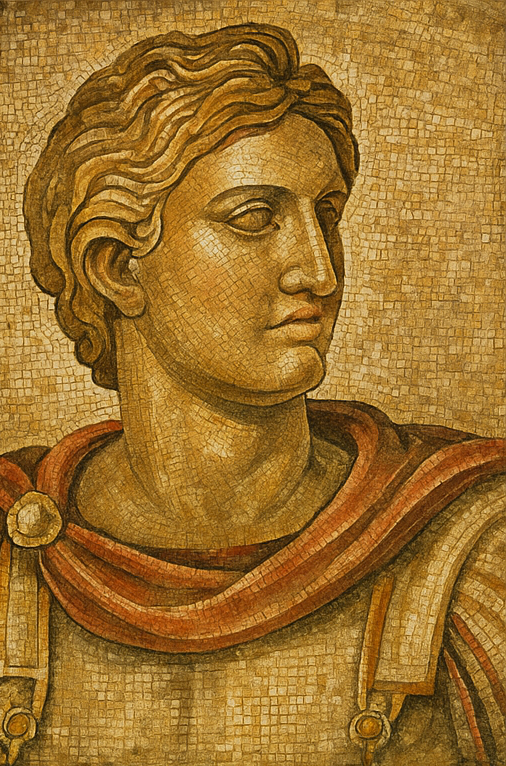
Alexander is one of the manifestations of divine light throughout history, combining spiritual wisdom and material power in just rule.
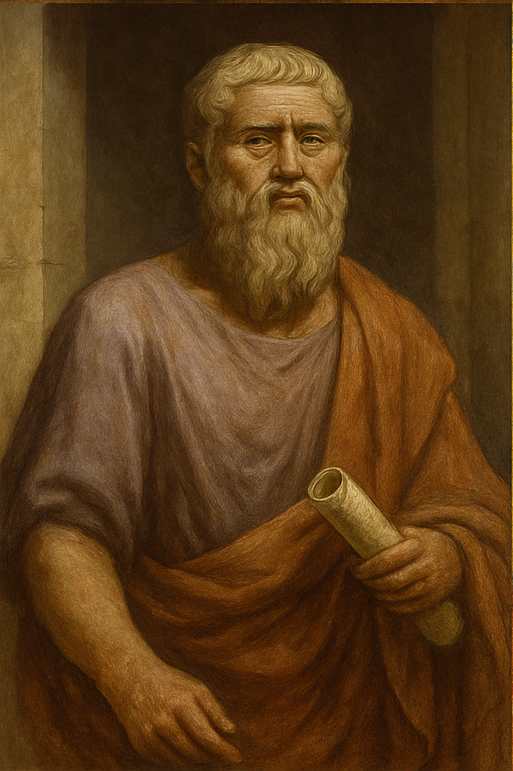
Plato is not only a Greek philosopher but also an inspiring spiritual and intellectual source, and he is the ruler of philosophers.
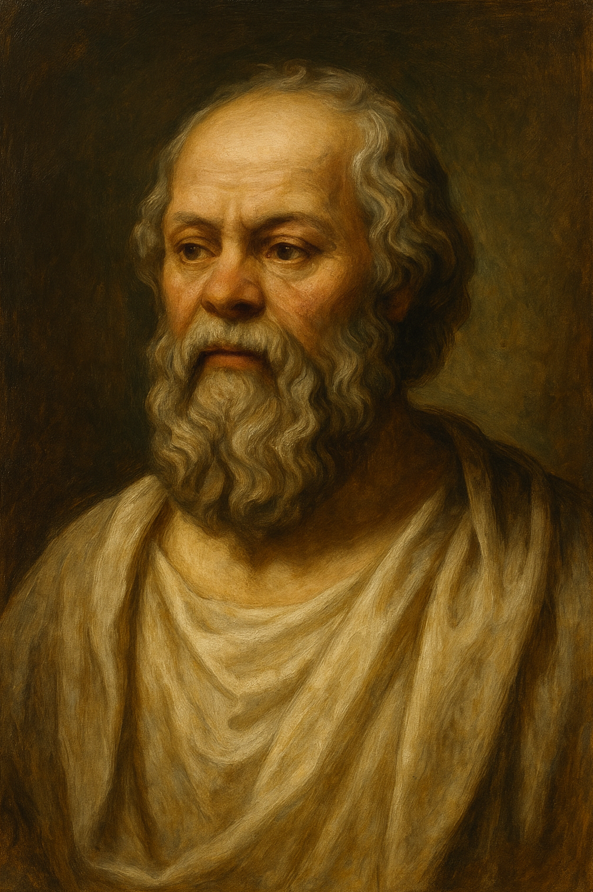
Socrates is a beacon of intellectual integrity.
A doctor who heals the wounds of ignorance and materialism.
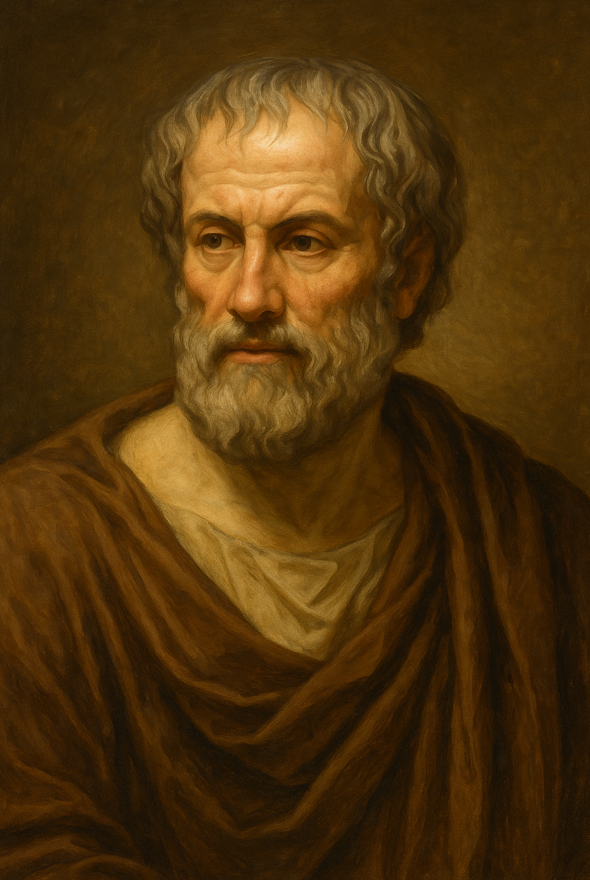
Aristotle highlights the value of the logical method and mental organization.
To purify knowledge from contradictions.
It is a gateway to understanding the secrets of the universe guided by rational evidence.
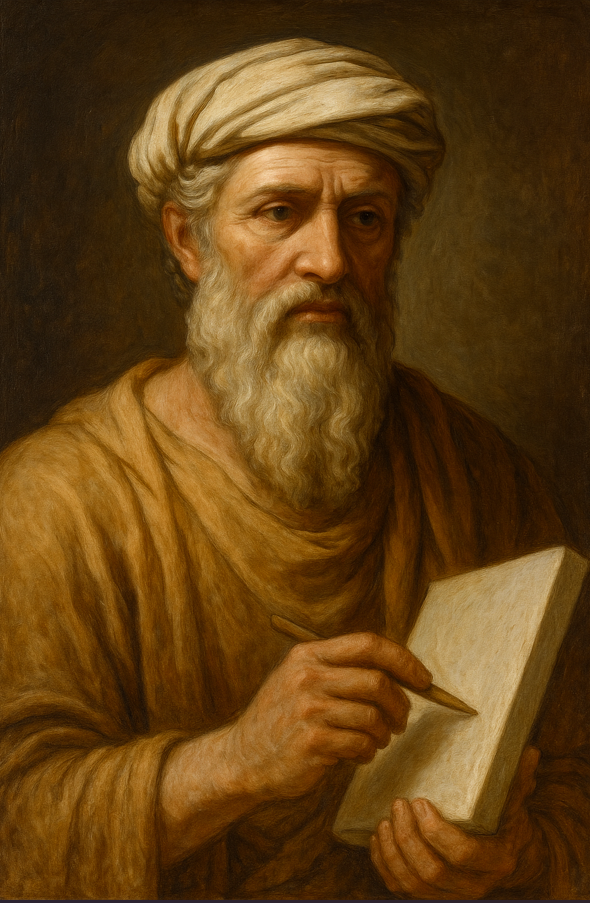
He is more than a mathematical philosopher; his principles are based on the harmony of numbers.
A symbol of cosmic unity and harmony,
And a bridge between mathematical theory and the inner secret of light.